
When Every Initiative Supports the Strategy, How Do You Prioritize Cuts?
FlashLight Federal Credit Union* executives had their strategic initiatives up on the screen. Each one…






FlashLight Federal Credit Union* executives had their strategic initiatives up on the screen. Each one…

Project portfolio management often breaks down at the point where organizations must choose between good…

A strong PPMO strategy does more than standardize project templates or collect status reports. Its…

Risk management is often treated as a reporting exercise: identify risks, score them, assign owners,…

FlashLight Federal Credit Union* executives had their strategic initiatives up on the screen. Each one supported the strategy. Each one had a good reason it could not wait. Then the Portfolio Leader changed the conversation: Since we cannot fund them all, which get cut? Saying an initiative is important is easy. Choosing between two important…

Project portfolio management often breaks down at the point where organizations must choose between good ideas. Portfolio prioritization is not simply assigning projects a score and sorting a spreadsheet. It is the management discipline of deciding where scarce money, people, and organizational attention will create the greatest value—and what work must wait. Research published by…

A strong PPMO strategy does more than standardize project templates or collect status reports. Its real job is to help leadership decide which work deserves investment, ensure the organization has capacity to deliver it, and keep the portfolio aligned as conditions change. The best PPMOs create a management system that connects strategic intent to execution….

Risk management is often treated as a reporting exercise: identify risks, score them, assign owners, and review the register. Project Risk management becomes much more valuable when it is built into how work is planned and executed—so teams can see threats early, act on them, and give executives a clear view of where intervention is…

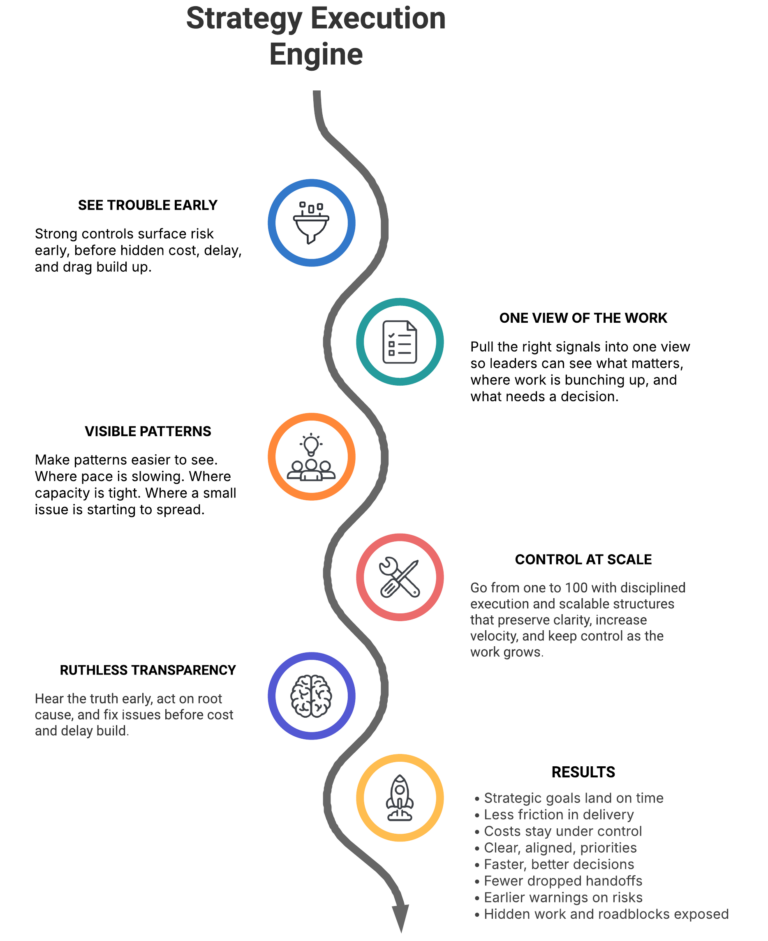
A strategy does not create results until people, money, decisions, and projects move in the same direction. That makes strategy execution a PPMO responsibility—not because the PPMO owns corporate strategy, but because it can create the operating controls that connect strategic priorities to work actually being delivered. The gap is measurable. McKinsey found that only…

Project management training should do more than teach methods, terminology, or software. The real test is whether people use what they learned when they return to their projects. For a PMO, that means connecting project management training to the work people actually perform. A project manager should be able to apply the training to a…

PMO Software Should Control Work, Not Just Report It PMO software is often selected because it promises dashboards, automation, resource planning, and executive visibility. Those capabilities matter, but they can miss the bigger question: does the tool help the organization make better decisions and execute work with less risk? That question is becoming harder to…

Strategy does not create results until an organization converts priorities into funded, staffed, governed work. That makes portfolio governance more than a PMO reporting process: it is the leadership mechanism that determines which strategic commitments receive resources, which projects wait, and where intervention is required. The execution gap is measurable. PMI’s 2025 research, based on…