

Most organizations already have project managers. Many even have a PMO. Yet they still have not closed the strategy execution gap, and the data shows the problem is widespread.
Harvard Business Review reported that 67% of strategies fail because of poor execution. McKinsey found that 70% of transformations fail to meet goals. The message is clear: execution is still where strategy breaks down.
That is why more enterprises are rethinking the traditional in-house PMO and looking more closely at a Fully Managed PMO service.
What is a Fully Managed PMO service?
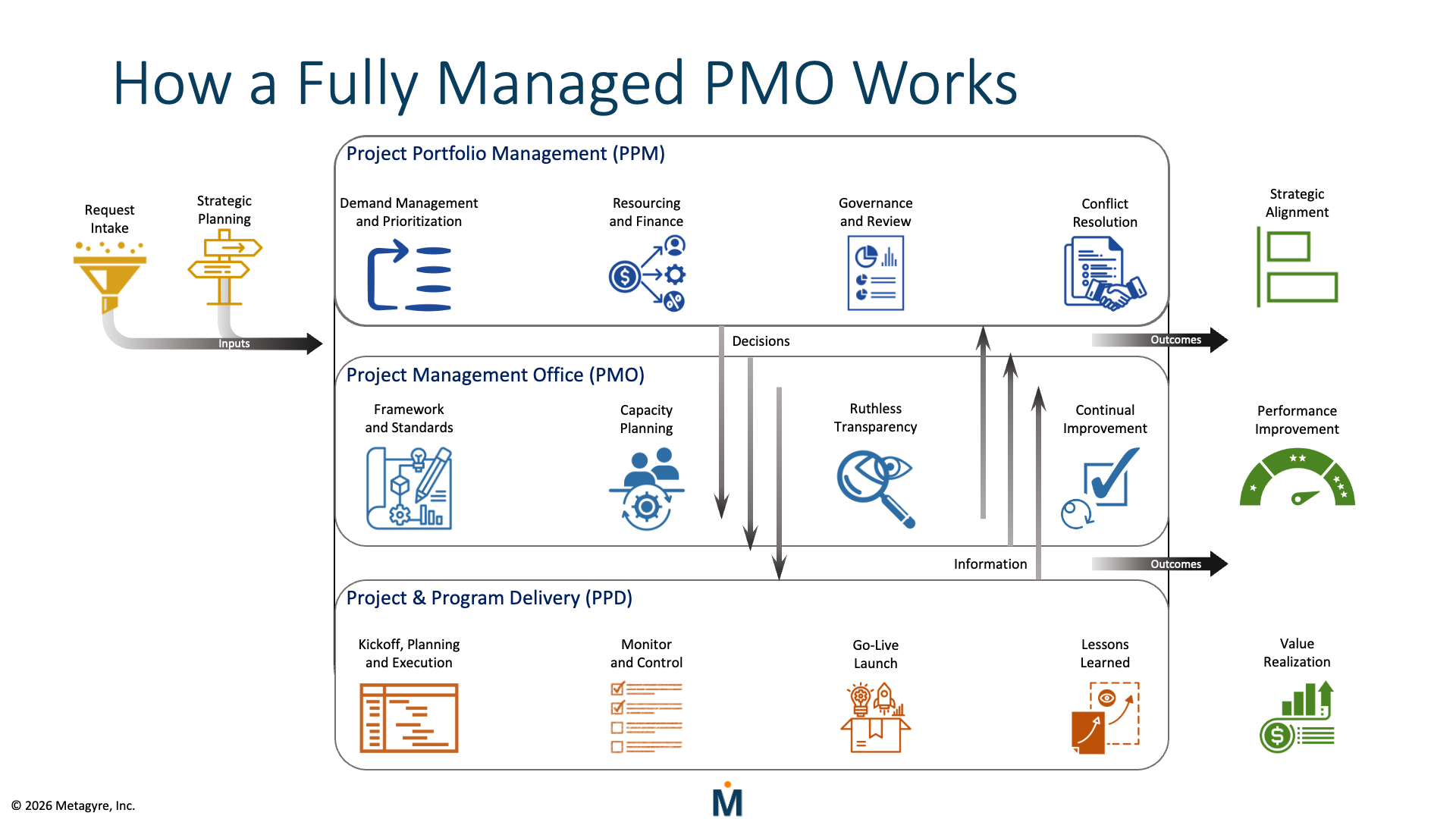
A Fully Managed PMO service is a subscription-based model that runs portfolio governance, prioritization, and delivery without the cost and burden of operating an internal PMO. It is not software, staff augmentation, or sideline support. It brings portfolio, program, and project leadership, proven controls, and outcome focus to the work.
Why the in-house PMO starts to strain
An in-house PMO can work. But it often gets harder to justify as the portfolio grows and the work gets more complex.
The cost is not just in starting it up. It is in keeping it going. Salaries rise. Benefits rise. Software subscriptions add up. Management overhead grows. Staff turns over. Knowledge walks out the door. And even at that cost, the model still tends to scale poorly. Adding capacity takes time. Reducing capacity is hard. Continuity gets fragile when key people leave. Many leadership teams still do not get the portfolio visibility, prioritization discipline, or predictable outcomes they expected.
That is why more enterprises are rethinking the model. A Fully Managed PMO service gives leaders a way to get all the capability without carrying the full burden of operating it internally.
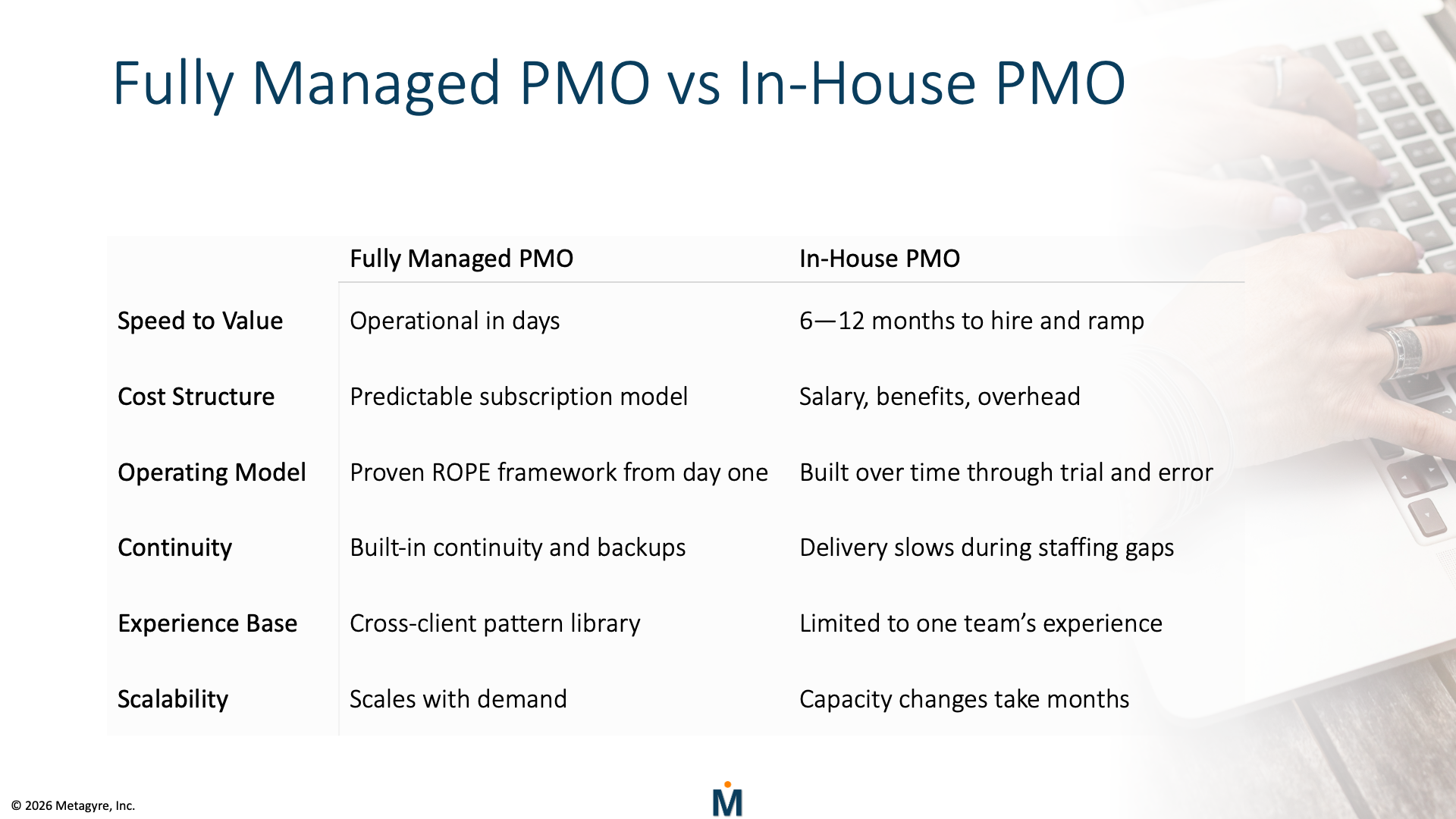
Fully Managed PMO vs. In-House PMO
The difference gets clearer when the two models are put side by side.
| Factor | Fully Managed PMO | In-House PMO |
|---|---|---|
| Speed to value | Operational in days | 6–12 months to hire and ramp |
| Cost structure | Predictable subscription model | Salary, benefits, overhead |
| Operating model | Proven ROPE framework from day one | Built over time through trial and error |
| Continuity | Built-in continuity and backups | Delivery slows during staff gaps |
| Experience base | Multi-client knowledge base | Limited to one team’s exposure |
| Scalability | Scales with demand | Capacity changes take months |
Side by side, the tradeoffs become clearer. A Fully Managed PMO service gets things done faster, scales more easily, and avoids the hiring, turnover, and continuity issues that often drag down an in-house PMO.
What this looked like in one credit union
At one mid-sized credit union, leadership thought key initiatives were on track until they engaged Metagyre’s Fully Managed PMO service. It quickly surfaced hidden work, competing priorities, and capacity drains that were slowing progress. Because those issues were identified early, leaders could stop low-value work, refocus resources on higher-impact initiatives, and regain control.
Why ROPE matters in this model
This model works because it is not just extra capacity. It comes with a way to run the work. At Metagyre, that operating model is powered by the ROPE framework, a practical approach for complex projects and programs. Most strategy execution problems are not caused by a lack of effort. They come from weak structure around priorities, decisions, risk, and follow-through. ROPE addresses that with practical tools, operating rhythms, and a stronger management approach for complex strategic work.
Readers who want to go deeper into ROPE can explore the framework itself, a deeper executive-focused breakdown of how it works, or use the ROPE Assistant to help assess where execution may be breaking down.
Learn more, then decide if it fits
For leadership teams weighing the tradeoffs, the question usually is not whether strategy execution matters. It is whether their current model gives them the adaptability, predictability, and outcome focus the work really needs.
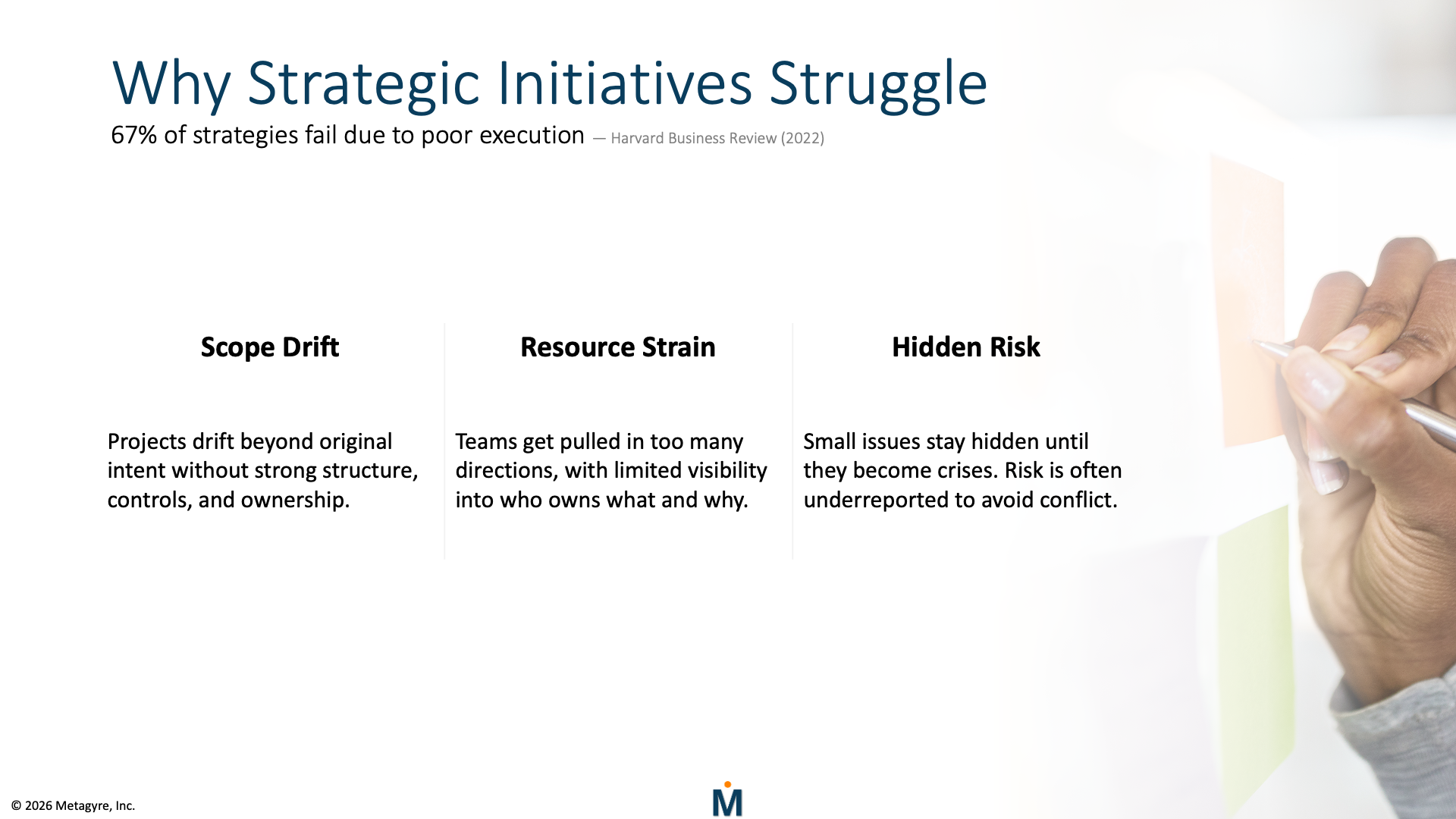
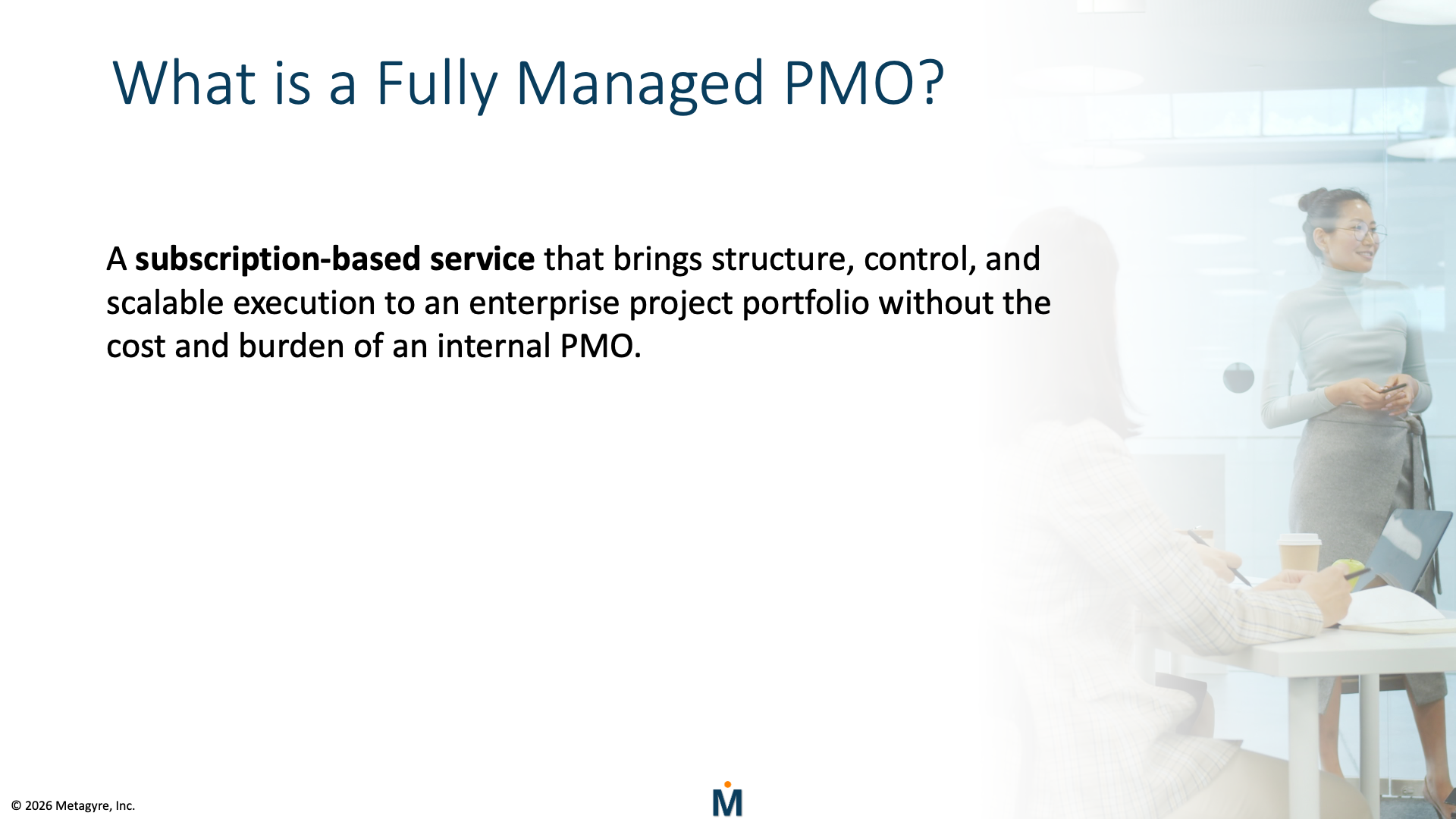
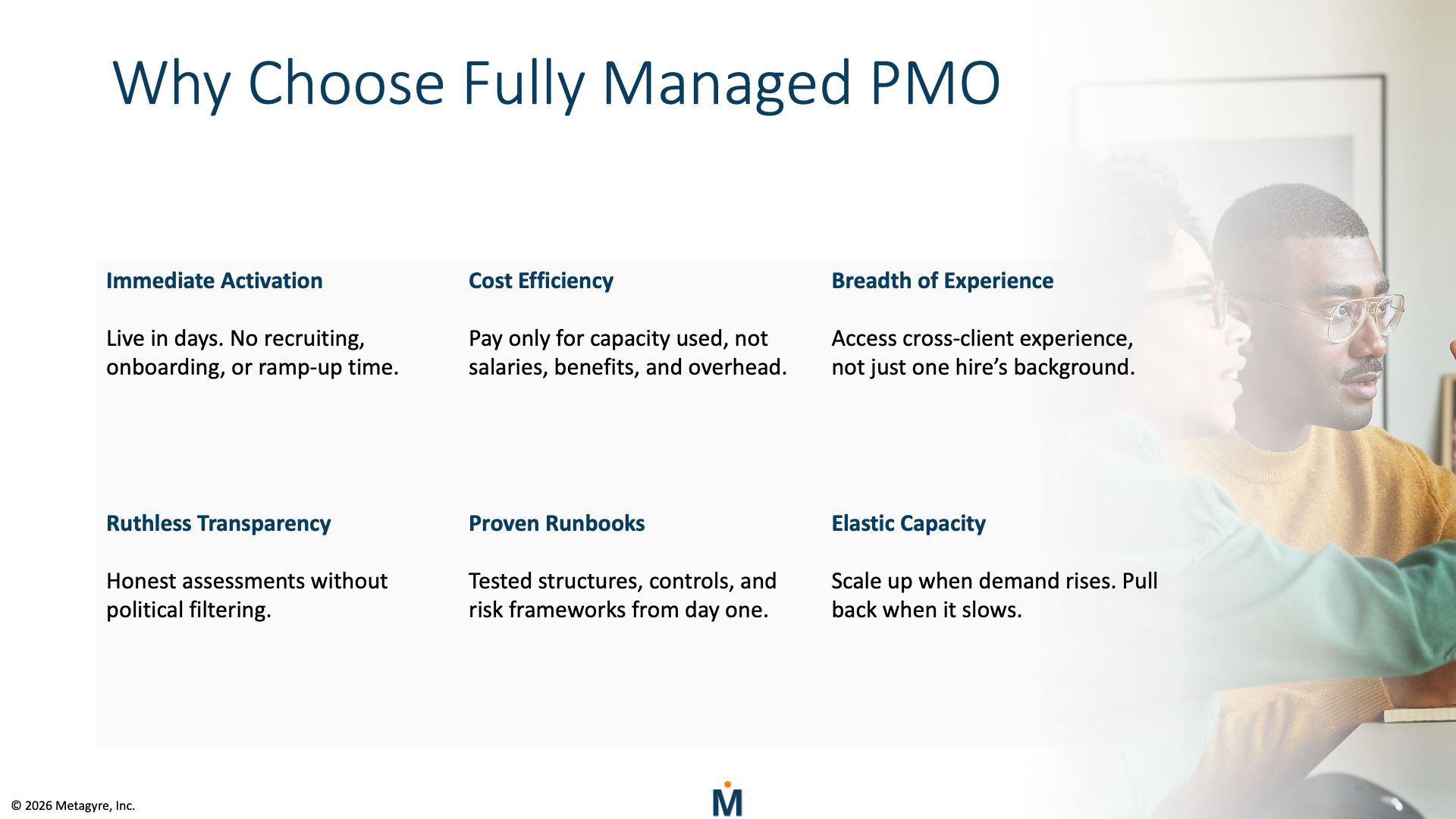
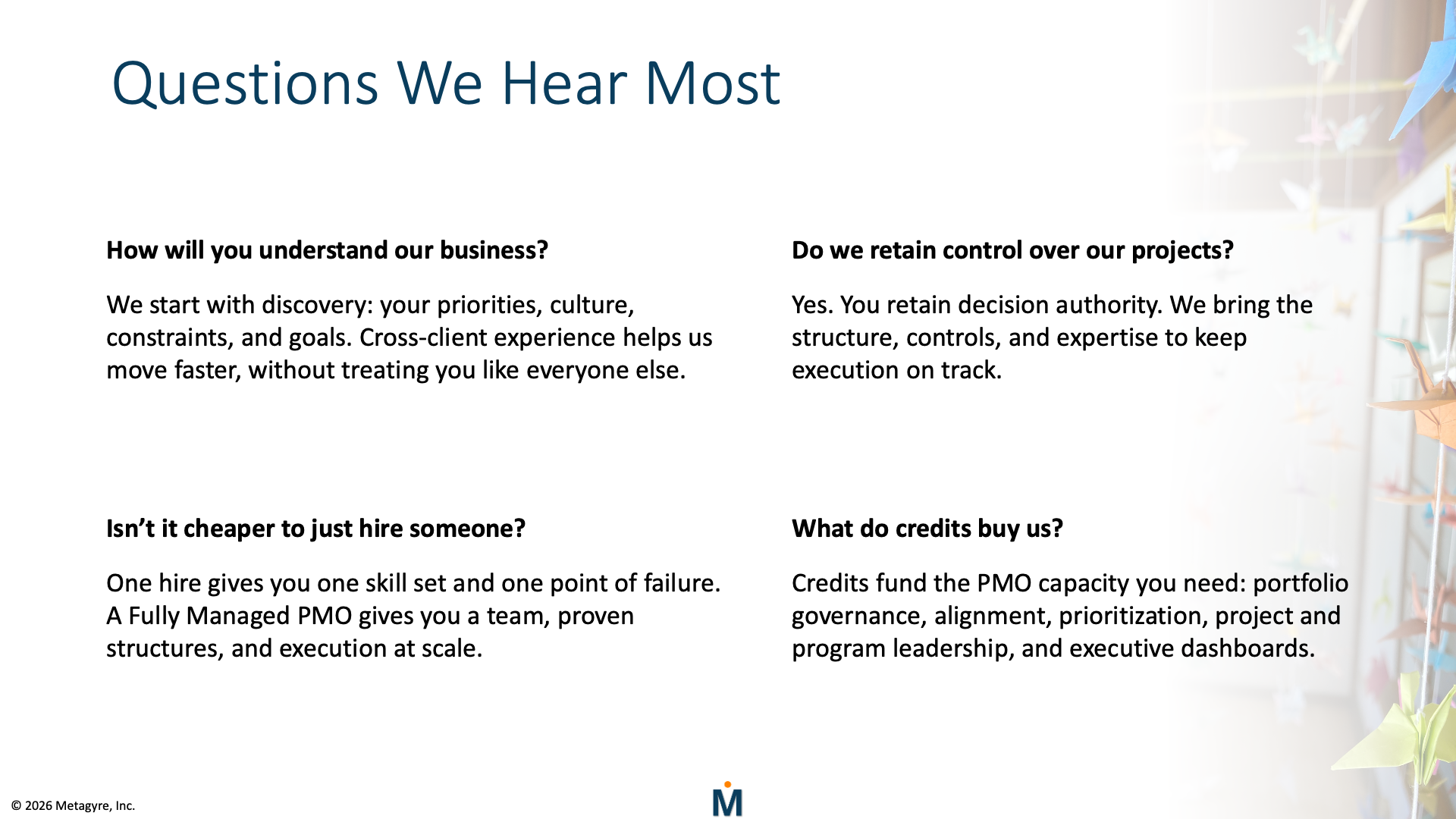
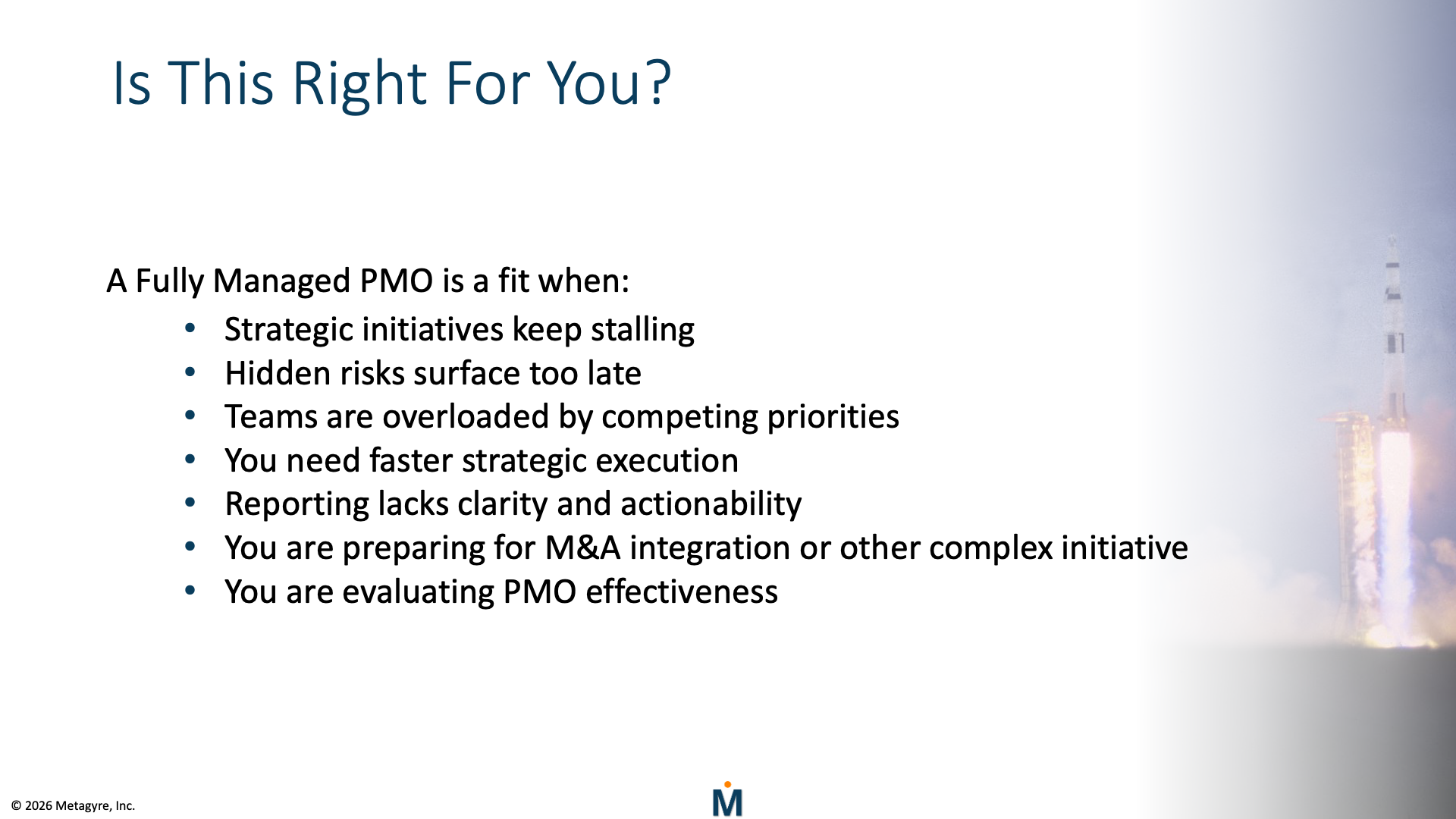
Download this Fully Managed PMO Service deck. It supports this article and walks through the model in a format that is easy to review and share internally. It covers why strategic initiatives struggle, what a Fully Managed PMO service is, how it compares to an in-house PMO, and the questions leaders usually ask before moving forward.
If the model looks relevant, review the deck, share it with the people who need to weigh in, and then book a discovery conversation to see what a Fully Managed PMO could look like in your environment.




4 thoughts on “Why More Enterprises Are Choosing a Fully Managed PMO Over an In-House PMO”
Comments are closed.